
29th April 2025
What The Supreme Court Ruling On Sex Means For Employers
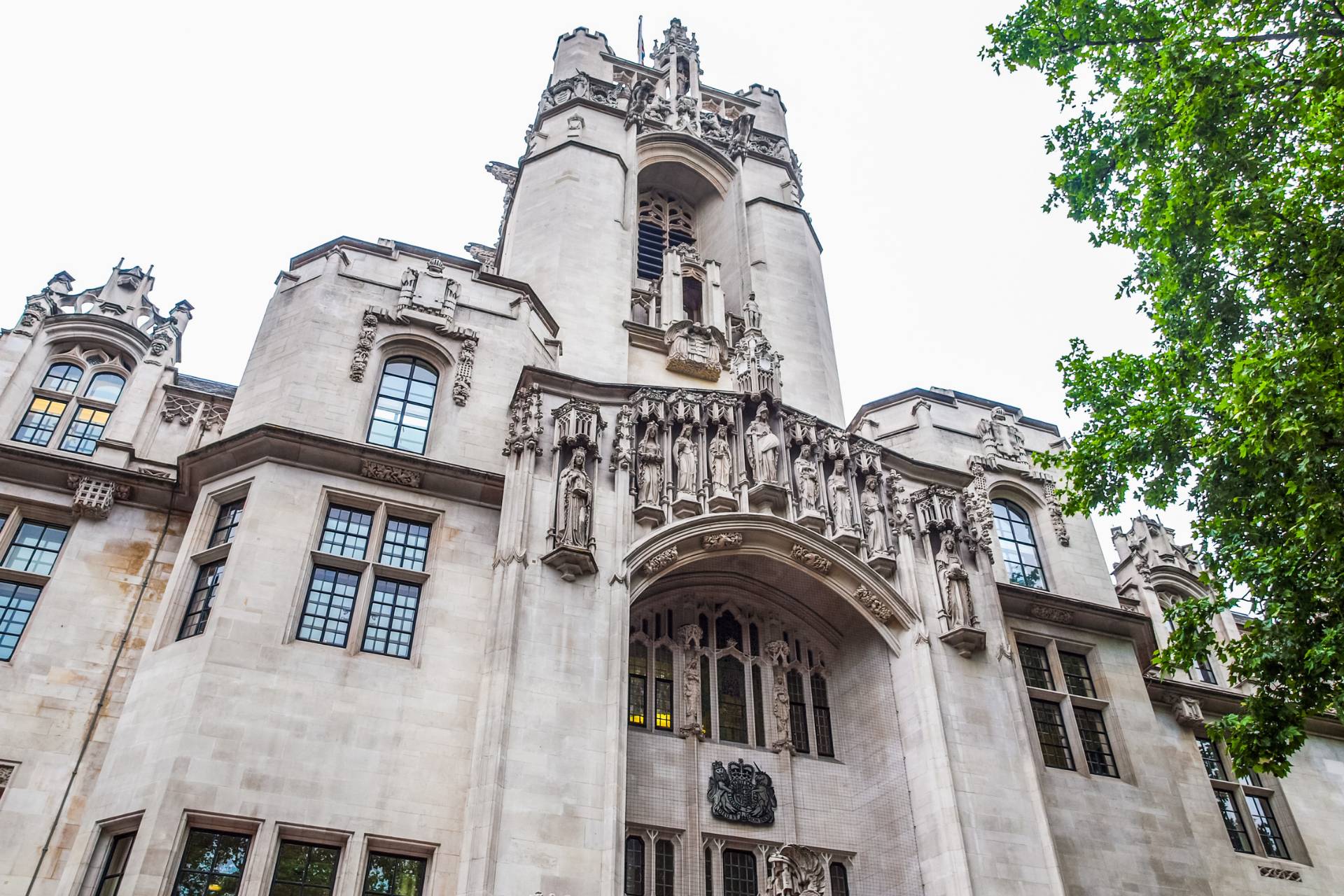
In a highly publicised ruling on 16 April 2025, the Supreme Court ruled that the legal definition of a woman under the Equality Act 2010 is based on biological sex.
The ruling was made following a case brought by For Women Scotland, a women’s rights advocacy group, against guidance by the Scottish government, which included trans women with a Gender Recognition Certificate under the definition of “women” for public board appointments.
The Supreme Court ruled that the definition of sex within the act refers to “biological women and biological sex”. They found that if trans women with a Gender Recognition Certificate were considered to be women under this definition, this would create inconsistencies within the Act.
This decision was supported by the Court finding that provisions in the Equality Act which related to sex discrimination could only be referring to biological sex, such as discrimination due to pregnancy and maternity. The Court suggested that if the definition of women within the act was not restricted to biological women, this would result in impractical and unworkable results.
The Equality Act makes it unlawful to discriminate on the grounds of ‘protected characteristics’. These protected characteristics include race, disability, and sex. The Supreme Court’s ruling was concerned with the definition of ‘sex’ under this Act.
Under the Act, it is unlawful to treat someone unfavourably because of their sex. However, the Court ruled that this definition of “sex” is limited to biological sex, and not acquired sex. This means that a transgender woman (a biological male) would not be considered as a woman under the and a transgender man (a biological female) would not be considered as a man under the Equality Act 2010.
However, the ruling was clear that transgender individuals are still protected under the Equality Act. Transgender individuals are still protected under the protected characteristic of Gender Reassignment, which means that it is still unlawful to treat someone unfavourably because they have changed their gender from their sex assigned at birth.
Furthermore, the Equality Act makes provision for ‘Discrimination by perception’. This is where someone is treated unfavourably because they are perceived to have a protected characteristic.
For example, if a transgender woman is refused for a role because she is perceived to be a biological woman, she would still be protected from discrimination on the grounds of sex.
The ruling has raised questions about whether organisations are now permitted to exclude trans individuals from single-sex spaces, such as women’s bathrooms. Whilst the ruling itself does not provide any answer to this, the Equality and Human Rights Commission (EHRC) has published interim guidance for providers who operate single-sex facilities, such as bathrooms or changing rooms. This guidance suggests that under the Equality Act, it may be lawful for organisations to prevent trans individuals from accessing single-sex spaces.
However, the Equality Act is clear that it is still unlawful to discriminate against someone because of the protected characteristics of sex and gender reassignment. As such, providers should avoid making any blanket policy decisions about access to single-sex spaces until further guidance is issued. Even the EHRC guidance suggests that it may be lawful for providers to limit access to single-sex spaces. Under the Equality Act, organisations are only permitted to lawfully exclude or limit access to certain groups if they can show that doing so is a “proportionate means of achieving a legitimate aim”. Whether something is “proportionate” or “legitimate” will be fact-dependent, as providers will have to carefully consider the size and resources of their organisation, their facilities, and balance the rights and needs of transgender and cisgender individuals. As such, providers should avoid making any blanket decisions about access to single-sex facilities until further guidance is issued.